Why Choose an Aluminium Front Door for Your Home?

Time:2026-10-12 Author:Oliver
0%

Choosing an Aluminium Front Door can change how a home feels before anyone enters. Its clean lines, firm frame, and smooth finish create a confident first impression. Yet appearance is only part of the decision.

In my experience, aluminium doors suit busy homes because they handle regular use without feeling fragile. A well-made frame resists warping, while powder-coated finishes can retain their colour through changing weather. The door should also include quality hinges, reliable locks, and effective weather seals. These details matter on a windy morning.

Comfort matters too. With suitable thermal breaks and properly fitted glazing, an aluminium entrance can help reduce draughts and indoor heat loss. Performance depends on the whole installation, not the frame alone. Poor fitting can undermine an excellent product.

Design choices are broader than many homeowners expect. You can select different colours, glass patterns, handles, opening directions, and threshold heights. A dark grey door may look striking against pale brick. A wider glazed panel can bring daylight into a dim hallway.

Still, aluminium is not perfect. Some finishes may show scratches, and premium systems can cost more than basic alternatives. Cleaning is simple, but neglected seals can age sooner than expected. Ask the supplier about certification, warranty coverage, drainage, and local installation experience.

A trustworthy decision starts with accurate measurements and honest comparisons. Consider your climate, security needs, insulation goals, and daily routine. The best Aluminium Front Door is not merely attractive. It should feel solid, close smoothly, and remain dependable after years of ordinary use.
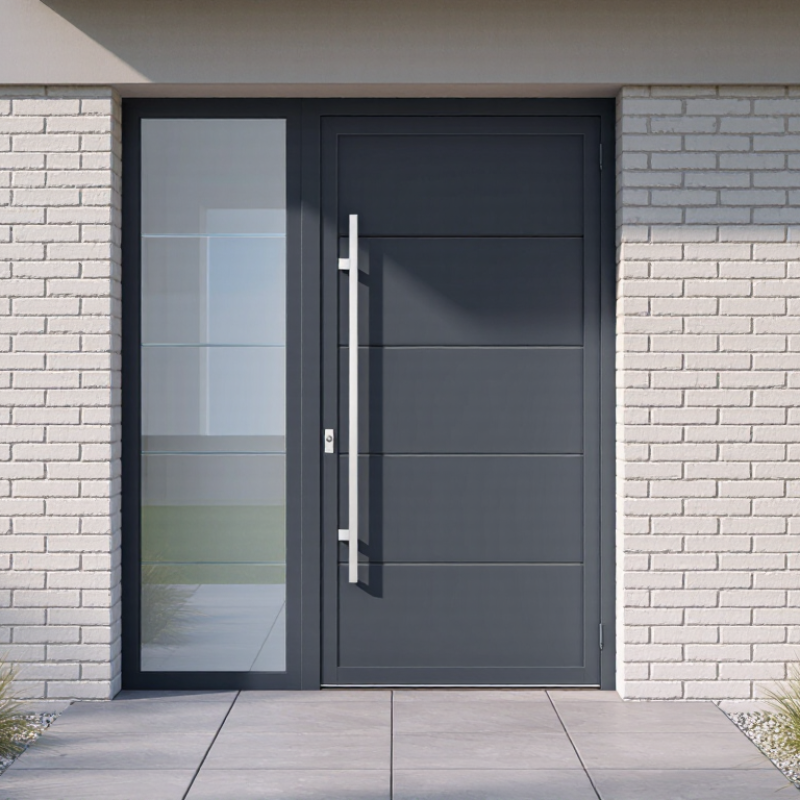
Why Choose an Aluminium Front Door for Your Home?

What Is an Aluminium Front Door?

An aluminium front door is an entrance door built with strong, lightweight aluminium frames and panels. Unlike solid timber, aluminium does not absorb moisture or swell during wet weather. It resists corrosion when properly finished and can retain a clean appearance for many years. Modern designs often include insulated cores, weather seals, and double or triple glazing. These parts help reduce draughts, outside noise, and heat loss around the entrance.

From practical experience, the frame feels firm when the door closes, especially on windy days. Aluminium also allows slim profiles, so more daylight can enter through glazed sections. However, the material is not automatically energy efficient. Poorly designed frames may feel cold near the edges. I once underestimated the importance of thermal breaks; the door looked excellent, but comfort suffered during winter. Professional measuring and installation matter because small gaps can cause rattling, condensation, or water penetration. A reliable installer should explain the frame construction, glass specification, drainage, and warranty conditions clearly.

Tips: Check for thermal-break technology and multi-point locking. Ask how the finish handles coastal air or heavy rain. Inspect hinges, seals, and drainage channels each year. Clean the surface with mild soapy water, not abrasive products. Think about your daily routine, too. A heavy door may feel reassuring, but it can challenge children or older users. Look closely before choosing.

How Aluminium Front Doors Are Made and Designed

Why Choose an Aluminium Front Door for Your Home?

An aluminium front door begins with accurate site measurements, not a catalogue size. A few millimetres can affect drainage, seals, and opening direction. Designers then select profiles with internal chambers and thermal breaks. These details reduce heat transfer through the frame. The drawing also sets glass size, threshold height, hinges, and lock positions. Small choices matter.


At the factory, aluminium billets are heated and pushed through shaped dies. The resulting profiles are cut to precise lengths. Corner joints are crimped or mechanically fixed, depending on the construction method. CNC equipment prepares drainage paths and hardware openings with consistent accuracy.

Before assembly, surfaces are cleaned and finished with a durable powder coating. Colour samples can look different in daylight. Check them outdoors.


Glazing is fitted with setting blocks, gaskets, and carefully controlled pressure. The door is hung, adjusted, and checked for smooth movement. Manufacturers may test air leakage, water resistance, security performance, and thermal values. A practical inspection should also examine the threshold after installation. It is easy to admire a clean finish and overlook poor sealing. I would question any design that hides maintenance access. Aluminium is strong, but hardware still needs adjustment over time. Good design leaves room for repair, replacement, and changing weather conditions.

Key Benefits of Aluminium for Home Entrances

Why Choose an Aluminium Front Door for Your Home?

Key Benefits of Aluminium for Home Entrances

Aluminium gives a front entrance a clean, precise appearance. Its slim profiles can allow more daylight through glazed sections. This matters in narrow hallways, where a heavy door can make the space feel closed. A properly designed thermal break reduces heat transfer through the frame. The door still needs quality seals and accurate installation. Aluminium alone is not an energy solution.

The U.S. Department of Energy reports that windows account for approximately 25–30% of residential heating and cooling energy use. A glazed entrance can contribute to similar comfort concerns, especially around its frame and seals. Look for documented U-values, insulated cores, and tested weather performance. On site, installers should check the threshold, corners, and closing pressure. Small gaps can create cold drafts. They are easy to overlook.

Durability is another practical advantage. Aluminium does not rot, swell, or attract termites, and it needs limited maintenance in normal conditions. The International Aluminium Institute states that about 75% of all aluminium ever produced remains in use today. This supports its long service potential, although recycling depends on responsible collection and processing. Finishes can still scratch, and coastal air may demand more frequent cleaning. That weakness deserves attention. A well-specified aluminium door can feel secure, stable, and refined, but performance depends on the complete entrance system, not the frame alone.

Styles, Features, and Security Options to Consider

Why Choose an Aluminium Front Door for Your Home?

Aluminium front doors offer clean lines, slim frames, and strong everyday performance. They suit modern homes, renovated terraces, and simple country entrances. Popular styles include full-height glazing, vertical panels, textured finishes, and timber-effect surfaces. A well-designed door should feel balanced, not merely fashionable. It feels solid.

When selecting features, check the thermal break inside the frame. This reduces heat transfer and helps prevent cold edges around the entrance. Low-threshold options improve access for children, older residents, and wheelchair users. Glass can be clear, frosted, tinted, or patterned, depending on privacy needs. I would not choose large clear glazing without considering nearby paths and street lighting. Small details matter.

Security deserves practical attention. Look for a certified multi-point locking system, reinforced hinges, a strong cylinder, and laminated or toughened safety glass. A concealed hinge may look neater, but it still needs proper adjustment and maintenance. Ask how the frame handles water drainage, because poor installation can weaken good materials. The lock is only one part. A secure door also depends on accurate fitting, a firm surrounding wall, and sensible lighting. No door is perfect. Sometimes, homeowners over-specify security and overlook daily comfort, such as opening weight, handle height, and draught control. A careful supplier should explain these compromises clearly before installation.

How to Choose and Maintain the Right Aluminium Front Door

An aluminium front door should be chosen for performance, not appearance alone. The U.S. Department of Energy reports that windows can cause 25–30% of residential heating and cooling energy use. Doors form part of the same building envelope. Ask for verified U-factor, solar heat gain coefficient, and air-leakage figures from the National Fenestration Rating Council. A lower U-factor usually improves insulation, but your climate still matters. A sunny entrance may need controlled solar gain.

Measure twice.

Look for a thermally broken aluminium frame, insulated low-emissivity glazing, and a well-sealed threshold. The 2023 Global Status Report for Buildings and Construction estimates that buildings consume about 30% of global final energy. Small envelope improvements deserve attention. However, a high-performing door can fail through careless installation. The opening should be checked for squareness, moisture, and uneven floors before fitting. Ask for written installation details, not only a product brochure. I would not trust a showroom sample completely.

Maintenance is practical. Clean the frame with mild soap and clean water, following the environment-based guidance in AAMA 609 and 610. Coastal homes need closer inspection because salt can attack finishes and hardware. Check seals for gaps, clear drainage channels, and lubricate moving parts only with suitable products. Avoid abrasive pads and harsh chemicals. A soft cloth is safer. Recheck alignment when the door begins rubbing. That small symptom may indicate hinge movement, settlement, or a damaged seal, rather than a faulty aluminium frame.

Why Choose an Aluminium Front Door for Your Home? - How to Choose and Maintain the Right Aluminium Front Door

Evaluation Area What to Look For Typical Aluminium Door Information Practical Homeowner Benefit
Material durability Powder-coated or anodised aluminium profiles with properly treated surfaces Aluminium does not rust like iron or steel, although surface damage and unsuitable environments can still cause corrosion Suitable for exposed entrances when the finish and drainage details are correctly specified
Thermal performance A thermally broken frame, insulated door panel and low-emissivity double or triple glazing Thermal breaks reduce direct heat transfer through the aluminium frame; whole-door performance depends on the complete door assembly Helps reduce drafts, condensation risk and heat loss compared with an uninsulated metal frame
Energy rating A declared U-value or equivalent performance rating for the complete installed door Lower U-values indicate lower heat transfer; compare products using the same measurement method and boundary conditions Makes product comparisons more meaningful than judging the frame material alone
Security Multi-point locking, a reinforced cylinder area, laminated or toughened safety glass and secure hinges Security depends on the door leaf, frame, hardware, glazing and installation working together Improves resistance to forced entry when the complete system is correctly fitted and maintained
Weather resistance Continuous seals, a properly adjusted threshold, drainage paths and accurate installation Air, water and wind performance varies by design and should be supported by product test information Reduces water ingress, wind noise and cold-air leakage around the entrance
Design flexibility Available panel styles, glazing options, colours, thresholds and opening configurations Aluminium profiles can support slim sightlines and a wide range of contemporary and traditional designs Makes it easier to coordinate the front door with the façade and available entrance space
Maintenance routine Clean surfaces with mild soapy water; keep tracks, drainage holes and seals free from debris Avoid abrasive cleaners, strong solvents and tools that can damage the coating or seals Preserves appearance and helps prevent avoidable operating problems
Hardware checks Inspect hinges, handles, locks and fixings; lubricate only with products compatible with the hardware Check at least annually, and more often where the door is heavily used or exposed to coastal conditions Helps maintain smooth operation and identifies loose or worn components early
Coastal suitability A finish and hardware package designed for salt-laden air, with regular rinsing and inspection Salt deposits can accelerate corrosion of coatings, fixings and hardware even when the main frame is aluminium Supports longer service life in marine or high-exposure locations
Installation quality A level, plumb and square opening, correctly sealed perimeter joints and an accurately adjusted door Poor installation can reduce security, weather tightness and thermal performance regardless of material quality Ensures the selected door performs as designed throughout daily use
Selection note: Always compare the complete door system—including the frame, panel, glazing, seals, hardware and installation details—rather than evaluating aluminium as a material in isolation.

FAQS

Why are accurate measurements important for an aluminium front door?

Measurements affect drainage, seals, threshold height, and opening direction. A few millimetres matter. Incorrect sizing can cause gaps or difficult movement.

How are aluminium door profiles produced?

Aluminium billets are heated and pushed through shaped dies. The profiles are then cut to precise lengths. CNC equipment creates drainage paths and hardware openings.

What does a thermal break do?

A thermal break reduces heat transfer through the frame. It can limit cold edges around the entrance. Its real performance still depends on correct installation.

Which design styles are available?

Common options include full-height glazing, vertical panels, textured surfaces, and timber-effect finishes. Slim frames create a clean appearance. Fashion alone is not enough.

What glass should homeowners consider?

Glass may be clear, frosted, tinted, or patterned. Frosted or patterned glass can improve privacy near paths and street lighting. Large clear panels need careful placement.

What security features should an aluminium front door include?

Consider a certified multi-point lock, reinforced hinges, and a strong cylinder. Laminated or toughened safety glass can provide additional protection. The lock is only one part.

Are low thresholds useful?

Low thresholds can improve access for children, older residents, and wheelchair users. They must still manage water effectively. Poor drainage creates problems.

How is door quality checked after installation?

The door should open smoothly and close without excessive force. Inspect seals, drainage, glazing pressure, and the threshold. A neat finish can fool you. Hardware may need adjustment later.

Conclusion

An Aluminium Front Door is a modern entrance solution made from strong, lightweight aluminium profiles, usually combined with insulated panels, glass, seals, and durable protective finishes. During production, the material is precisely cut, shaped, assembled, and coated to create a door that is both attractive and practical. Its clean appearance can complement contemporary, traditional, or minimalist homes, while its resistance to corrosion, warping, and everyday wear makes it suitable for different climates.

Homeowners can choose from various colours, panel designs, glazing options, handles, thresholds, and locking systems to match their style and security needs. Aluminium also supports excellent insulation when paired with suitable thermal breaks and quality seals, helping improve indoor comfort and energy efficiency. To select the right door, consider the frame quality, glass performance, opening direction, security features, installation requirements, and overall design. Maintenance is straightforward: regular cleaning, checking seals and hardware, and lubricating moving parts can help keep the door secure, smooth, and attractive for many years.

Oliver

Oliver

Oliver is a seasoned marketing professional with a wealth of expertise in driving brand awareness and engagement. With a deep understanding of our company's product offerings, he consistently delivers high-quality content that enriches our professional blog. His insights not only shed light on......