An Aluminum Exterior Door does more than mark an entrance. It frames the first impression, faces rain and sun, and helps separate indoor comfort from outdoor weather. The choice is not purely aesthetic. Frame design, glazing, hardware, seals, and installation all affect how a door performs over time.
The U.S. Department of Energy reports that heat gain and loss through windows account for about 25%–30% of residential heating and cooling energy use. That figure concerns windows, not doors, but it shows why openings deserve careful attention. Fenestration researcher Dariush Arasteh’s published work at Lawrence Berkeley National Laboratory offers a useful reminder: evaluate the complete assembly, not the frame alone. A sleek profile can still disappoint if its weather seals or installation are poor.
This guide compares the top types of aluminum exterior doors, including sliding, hinged, folding, and pivot styles. Each suits a different space. A sliding door can open a patio to a bright garden without taking up much floor area. A hinged entry door may offer a more traditional, defined threshold. Folding systems create broad openings, but need room and careful detailing. There is no universal winner. Look closely at your climate, opening size, maintenance needs, and how the door will be used every day.
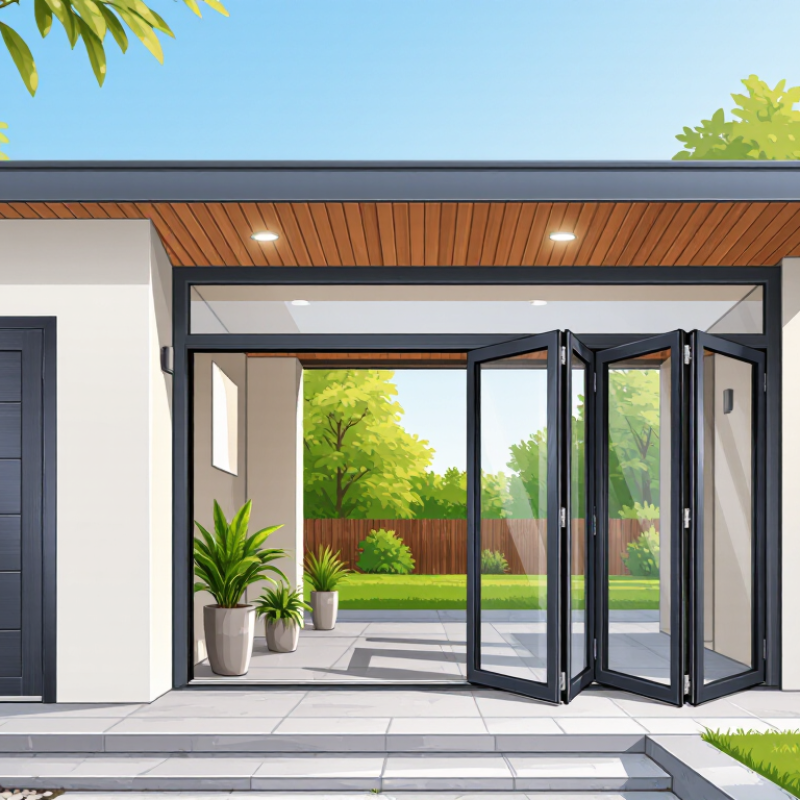
Aluminum exterior doors are best classified by how they open, how their frames are built, and what glazing they contain. Operation is the easiest distinction: hinged doors swing inward or outward, sliding doors run along a track, and folding systems stack panels beside the opening. Each suits a different space. A narrow patio may favor sliding panels, while a busy entry often works better with a hinged leaf.
Frame construction matters, too. Non-thermally-broken aluminum transfers heat more readily; a thermal break inserts an insulating barrier between the frame’s inner and outer sections. That detail can affect comfort near the doorway on cold mornings. The U.S. Department of Energy’s Energy Saver guidance estimates that windows account for about 25–30% of household heating and cooling energy use, so glazed door panels deserve careful attention. Check the National Fenestration Rating Council label for U-factor and solar heat gain coefficient, rather than judging performance by frame material alone.
Glazing creates another useful category: clear, tinted, reflective, or insulated glass, with single or multiple panes. AAMA/WDMA/CSA 101/I.S.2/A440 provides performance classifications for fenestration products, including doors, based on tested criteria such as air leakage and water penetration. Ratings help compare products, but installation still counts. A small gap at the sill can invite drafts. And labels cannot show every jobsite detail. A perfectly rated door may disappoint if it is poorly fitted.
| Door Type | Typical Configuration | How It Operates | Common Applications | Key Considerations |
|---|---|---|---|---|
| Single-Hinged Door | One door leaf in a fixed frame; may include a glazed panel or a larger glazed area. | Swings inward or outward on side hinges. | Main entrances, side entrances, and access to patios or yards. | Requires clear swing space. Weather sealing, threshold design, hardware, and glazing affect overall performance. |
| Double-Hinged Door | Two hinged leaves, often equal in width; one leaf may be secured when not in use. | One or both leaves swing open from the center. | Wide entrances, garden access, and openings where a broader passage is useful. | Needs swing clearance on the chosen side. Meeting-stile seals and secure inactive-leaf bolts are important design details. |
| Sliding Patio Door | Two or more panels set in parallel tracks; typically, one panel slides past another. | Moves horizontally along tracks rather than swinging into the room or outdoors. | Patios, balconies, and rooms with limited space for a swinging door. | Does not need swing clearance. Track upkeep, panel overlap, drainage, and the width of the clear opening should be considered. |
| Lift-and-Slide Door | Large sliding panels designed with specialized rollers and operating hardware. | Turning the handle raises the panel slightly for movement; closing the handle lowers it onto seals. | Large exterior openings and projects seeking wide glazed views. | Can support heavy panels, but requires compatible hardware and careful installation. Panel size and operation depend on the system design. |
| Folding (Bi-Fold) Door | Multiple connected panels that stack together at one or both sides of the opening. | Panels fold and travel along a track when opened. | Patios and indoor-outdoor openings where a wide passage is desired. | Provides a broad opening, but the folded panels occupy space at the sides. Track capacity, panel alignment, and weather seals matter. |
| Pivot Door | One door leaf supported by pivot hardware set away from the side edge. | Rotates around a vertical pivot point near the top and bottom of the leaf. | Architectural entrances and designs featuring a large or visually prominent door. | Requires suitable structural support and carefully specified hardware. The pivot position affects the opening and the space used by the door. |
| French-Style Hinged Door | Usually a pair of glazed hinged leaves fitted in a shared frame. | One or both leaves swing open, commonly from the center. | Traditional-style entrances and access to gardens, patios, or balconies. | Often chosen for its paired-door appearance and daylight. Confirm clear opening width, swing clearance, locking points, and weather sealing. |
Note: Aluminum doors are also differentiated by frame design, glazing, thermal breaks, hardware, and weather-sealing details. Energy efficiency, weather resistance, and security depend on the complete door system, its specifications, and installation—not on the door type alone.
Choose one for a compact opening and everyday access. Check that the panel can swing clear of furniture, steps, and walkways.
Two panels create a wider passage for furniture or busy foot traffic. Their meeting edges need careful alignment. Small gaps can cause trouble.
Confirm the opening measurements, hinge capacity, fixing points, and threshold drainage. Test the handle and closing action if possible.
Connected panels slide along a track and stack to one side. They can open a kitchen onto a terrace or patio.
Keep grit out of the tracks and check that heavy panels glide smoothly. More panels mean more joints and moving parts. It’s easy to overlook.
It turns on fixed points near the top and bottom, rather than side hinges. The broad panel can create a distinctive entrance.
Measure the doorway and floor area, especially in a tight hallway. Check whether the structure and pivot hardware can support the panel’s weight.
Compare thermal ratings, glazing, seals, and installation details. Thermal breaks may reduce heat transfer through the frame. Measure twice.
Aluminum Exterior Doors are available in several designs, each suited to different spaces, layouts, and architectural styles. They can be classified by how they open and the kind of access they provide. Hinged doors are a familiar choice, with single-leaf designs for everyday entrances and double-leaf options for wider openings or a more expansive look.
Sliding doors move along a track, helping save space while connecting indoor and outdoor areas. Folding doors consist of panels that stack to the side, creating a broad, flexible opening when fully open. Pivot doors rotate around a central or offset axis, offering a distinctive entrance and a striking visual feature. By considering available space, desired opening width, and the overall design of a building, homeowners can choose the aluminum door type that best fits their needs.

 Primeval Doors