What Is the Best Luxury Aluminum Entry Door for 2026?

Time:2026-11-09 Author:Sienna
0%

The best Luxury Aluminum Entry Door for 2026 is not simply the most dramatic design or the highest-priced model. It is the door that balances dependable performance, thoughtful engineering, and a clear fit with your home. A slim aluminum frame can create broad glass views, while a quality thermal break helps limit heat transfer. Still, specifications vary widely.

Details matter. This guide compares the features worth checking before you buy: frame construction, weather seals, glazing options, locking hardware, finish durability, and available sizes. It also considers how the entryway faces the weather. A west-facing door in strong afternoon sun may need different glass and finish choices than a shaded entrance in a mild climate. No single configuration suits every home.

Look beyond attractive product photography. Request documented performance ratings, care instructions, warranty terms, and installation requirements from the manufacturer or an authorized dealer. Ask how the threshold, sill, and surrounding wall will be sealed; small installation choices can affect comfort and water resistance. An elegant door can still disappoint if it is poorly fitted. That part is easy to underestimate.

The sections ahead explain how to compare premium options, identify practical trade-offs, and match a door to your budget and design goals. Consider which features matter most before comparing prices, since a higher cost does not automatically mean a better fit. There may not be one universal winner, and that is useful to remember. A careful choice starts with your home’s needs, not a showroom’s strongest impression.
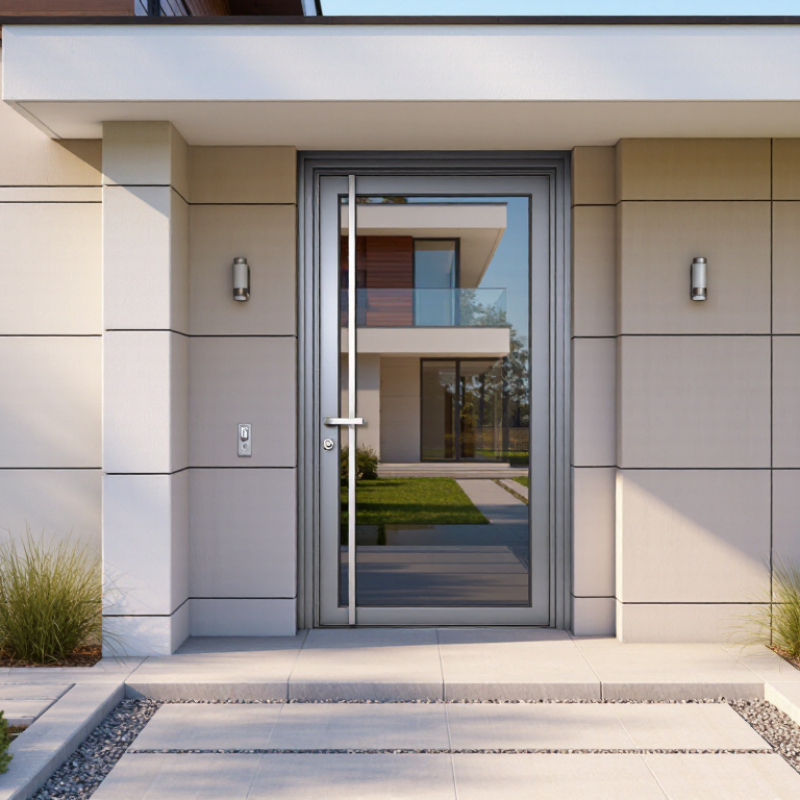
What Is the Best Luxury Aluminum Entry Door for 2026?

What Defines a Luxury Aluminum Entry Door?

A luxury aluminum entry door is defined by its performance and detailing, not by price or shine alone. The frame should feel rigid, with clean, even sightlines and corners that meet precisely. A thermal break helps limit heat transfer between the exterior and interior aluminum. In colder or hotter climates, that detail can matter more than an unusually thick-looking frame.

Look closely at the operating parts. The door should swing smoothly without scraping, and its seals should compress evenly when closed. Quality hinges, a dependable multi-point lock, and a properly supported threshold contribute to a solid, quiet feel. Small details count. A slight gap at one corner can invite drafts or water, even when the door itself is well made. Installation matters just as much as the product.

Finishes should resist fading and corrosion under the conditions the entry faces, including strong sun or coastal air. Glazing can bring daylight into a dark foyer, but its size and placement affect privacy, heat gain, and security. I would not judge a door by a showroom sample alone; ask how its finish, hardware, and thermal design suit your actual site. That part is easy to overlook. No single specification makes a door luxurious, and some appealing details may add little in a particular home.

What Defines a Luxury Aluminum Entry Door?

Thermal performance is one important part of a well-designed entry door. This chart compares the approximate thermal conductivity of common door materials; lower values indicate less heat flow through the material itself.

Typical material values in W/(m·K), shown on a logarithmic scale. Actual values vary by alloy, glass composition, wood species, and temperature. A thermal break, insulated glazing, quality weather seals, secure hardware, and durable finishes also contribute to an aluminum door’s overall performance.

How Aluminum Door Construction Affects Performance

A luxury aluminum entry door performs well when its frame controls heat, water, air, and movement—not merely when its metal looks substantial. A thermal break separates the exterior and interior aluminum, limiting heat transfer through the frame. Ask for the whole-door U-factor, not just the glass rating; the National Fenestration Rating Council rates products using standardized methods. The U.S. Department of Energy estimates that windows account for 25–30% of residential heating and cooling energy use. That figure is not door-specific, but it shows why glazing and frame details deserve attention.

Details matter. Look for reinforced corners, continuous weather seals, and drainage paths that move water away from the threshold. A door exposed to wind-driven rain needs tested air and water performance, not just a thick profile. The Fenestration and Glazing Industry Alliance’s AAMA 2605 specification includes 4,000 hours of salt-spray testing for qualifying finishes. That is a laboratory test, not a promise of service life.

Installation can undo good construction. A poorly leveled threshold may leave a visible gap, even on a carefully engineered door. Compare test ratings for the complete assembly, including glass, frame, and hardware. I would also ask how the installer handles the wall-to-frame joint. It is easy to overlook. A high rating on paper cannot compensate for a weak seal in the field.

Which Features Matter for Security, Insulation, and Durability?

A luxury aluminum entry door should feel solid before its finish catches the eye. Security depends on the whole assembly, not just a heavy-looking slab. Look for a reinforced frame, protected hinges, and a multipoint lock that engages cleanly. Ask how the lock, strike plate, and frame work together. Fit matters. Even a strong door can disappoint if its jamb shifts or gaps remain.

Insulation depends on details hidden at the edge. A thermal break reduces heat transfer through the aluminum, while continuous weather seals help limit drafts and rain. Check the published whole-door U-factor, not just a center-panel figure, and consider your climate. On cold mornings, poor edge insulation can invite condensation. Numbers help. Glazing, if included, should also have suitable insulating performance. Much depends on installation.

Durability is not simply a thick coating. Ask about finish testing, suitability for wet or coastal conditions, drainage paths, and hardware corrosion resistance. Inspect corners and seals yearly; small failures are easier to address early. I would resist choosing by appearance alone, though that is easy to do. A sleek, low threshold may be less forgiving of wind-driven rain. Ask the installer how the door will be anchored to your specific wall.

How to Compare Luxury Aluminum Entry Door Options for 2026

In 2026, compare luxury aluminum entry doors by tested performance, not showroom weight. A sheltered porch faces different wind-driven rain than an exposed wall. Ask for the complete unit’s air-leakage, water-penetration, and structural ratings under the NAFS standard. Frame-only claims are not enough. Details matter.

Thermal performance deserves equal scrutiny. The U.S. Department of Energy estimates that windows account for about 25–30% of residential heating and cooling energy use. That figure concerns windows, not entry doors. Still, it matters when a door package includes large glass panels or sidelights. Compare NFRC-certified U-factor and solar heat gain coefficient for the actual glazed configuration. Choose ratings suited to your climate. Ask whether the aluminum frame has a thermal break, and inspect the threshold and weather seals.

Then compare hardware, finish, and service access. A multi-point lock should engage smoothly without forcing the door; ask to test it on a full-size sample. Check finish specifications for UV and corrosion resistance, especially near the coast. A finish chip under warm showroom lights can be misleading. Request written warranty terms and maintenance instructions, too. I would not treat a thick-looking frame as proof of strength; verified test ratings are more useful. Measure the rough opening carefully. A premium door can still perform poorly if installation leaves gaps or an uneven sill.

How to Choose the Right Door for Your Home and Budget

A luxury aluminum entry door should fit the house before it impresses visitors. Start with the opening’s width, height, swing, and nearby walls; a wide pivot door may need more clearance than expected. Measure twice. Ask the installer to check the rough opening, threshold height, and water-management details before comparing quotes. These choices affect labor and comfort, not just appearance.

Match performance to your climate and daily routine. Thermal breaks and well-sealed frames can reduce heat transfer, while insulated glazing can bring daylight without making the entry feel exposed. Compare tested thermal and air-leakage ratings, warranty terms, and finish-care instructions; specifications vary by configuration. A matte dark finish may show dust near a busy driveway. Textured glass can soften views, but it may also reduce brightness. Budget for delivery, hardware, installation, and possible framing repairs—not only the door itself. That adds up. I would not choose the most elaborate panel automatically; a simpler design with careful installation may serve better. Still, estimates can miss hidden site work, so leave room for surprises.

What Is the Best Luxury Aluminum Entry Door for 2026? — How to Choose the Right Door for Your Home and Budget

Compare common luxury aluminum entry-door configurations by installed budget, performance priorities, and ideal use. The best choice depends on your opening, local climate, exposure, and design goals.

Door Configuration Indicative Installed Budget (USD) Typical Design Features Thermal Performance to Check Best Fit Key Trade-Off What to Confirm Before Buying
Thermally broken, insulated single door $3,000–$8,000 Single leaf; insulated core; powder-coated or anodized aluminum finish; optional narrow glass panel. Ask for the whole-unit U-factor and air-leakage rating. A lower U-factor generally means less heat transfer. Best value
Smaller or standard-size entry openings and budget-conscious renovations.
Fewer design and size options than a fully custom system. Verify thermal breaks, weather seals, threshold details, finish warranty, and whether installation is included.
Custom insulated door with sidelights $6,000–$15,000 Made-to-order door with one or two fixed glazed side panels; multiple glass, finish, and hardware choices. Compare whole-assembly U-factor and solar heat gain coefficient (SHGC), especially when the glass faces strong sun. Best all-round upgrade
Homes needing more daylight and a tailored entry appearance.
More glazing can increase heat gain or heat loss compared with an insulated opaque door. Check glass safety classification, insulated-glass specifications, frame drainage, and the dimensions of the complete assembly.
Oversized pivot door $8,000–$20,000+ Large, statement-making leaf that rotates on pivot hardware; often specified with a custom finish or long pull handle. Request tested performance for the actual size and configuration; larger leaves can make sealing and operation more demanding. Best for dramatic design
Contemporary homes with a wide, tall, structurally suitable opening.
Typically costs more and may require specialized installation and adjustment. Confirm structural support, pivot capacity, clearances, threshold accessibility, weather sealing, and service access.
High-performance glazed aluminum entry system $7,000–$18,000+ Door combined with larger glass areas or glazed sidelights; available with insulated glazing and different privacy options. Compare whole-unit U-factor and SHGC; specify glazing suited to the home's climate and orientation. Best for daylight
Entries where natural light and visual connection are priorities.
Performance and privacy depend heavily on the glazing selected; glass may need more frequent cleaning. Confirm safety-glazing requirements, privacy level, condensation expectations, and the tested rating for the full assembly.
Premium custom multi-panel entrance $15,000–$30,000+ Wide multi-panel arrangement, coordinated sidelights or transom, custom dimensions, and upgraded hardware or finishes. Obtain performance documentation for the complete installed configuration, not just an individual panel. Best for large openings
Major renovations and homes designed around a broad entrance.
Highest cost and complexity; the opening, structure, and installation tolerances are especially important. Request drawings, installation scope, lead time, finish and hardware details, warranty terms, and a written service plan.

Budget note: Price ranges are broad U.S. planning estimates for 2026, not quotes. Final costs vary with door size, glazing, hardware, finish, location, structural changes, removal of the existing door, and installation conditions. Ask for a written quote and product performance documentation for the exact configuration.

FAQS

What makes an aluminum entry door feel secure?

Look beyond a heavy-looking slab. Check the reinforced frame, protected hinges, and multipoint lock. The lock, strike plate, and frame should work together. Fit matters.

How can I compare a door’s insulation?

Ask for the whole-door U-factor, not only a center-panel figure. Check for a thermal break and continuous weather seals. Look closely at the threshold. Cold mornings reveal weak edges.

What performance ratings should I request?

Ask for tested ratings for air leakage, water penetration, and structural performance. They should apply to the complete door unit. Frame-only claims are not enough.

Does glazing change how a door performs?

Yes. Large glass panels and sidelights affect thermal performance. Compare the actual glazed configuration’s U-factor and solar heat gain rating. A sample may not match your final layout.

What should I check for a coastal or wet location?

Ask about corrosion-resistant hardware, finish testing, drainage paths, and suitability for wet conditions. Inspect corners and seals yearly. Small failures are easier to repair.

How can I tell if the lock works well?

Test it on a full-size sample. It should engage smoothly without forcing the door. A stiff handle deserves another look.

Why does installation matter so much?

An uneven sill or gaps can undermine a well-built door. Ask how it will be anchored to your wall. Measure the rough opening carefully.

Is a thick frame proof of strength?

Not by itself. Verified whole-unit test ratings offer better evidence. I might still be tempted by a sleek frame, but appearance can mislead.

Conclusion

Choosing the best Luxury Aluminum Entry Door for 2026 means looking beyond appearance. A well-designed door pairs a refined finish with sturdy construction, precise installation, and components suited to everyday use. Its frame, panel design, glazing, seals, and hardware all influence how it performs, so comparing these details can help reveal differences that are not obvious at first glance.

Security, insulation, and durability should guide the comparison. Consider the strength of the locking system, the quality of weather seals, thermal performance, resistance to corrosion, and the maintenance each finish may require. Then match those features to your home’s climate, architectural style, entryway dimensions, and budget. By weighing long-term comfort and upkeep alongside upfront cost, homeowners can choose a door that offers a balanced combination of protection, efficiency, and lasting visual appeal.

Sienna

Sienna

Sienna is a skilled marketing professional with a deep expertise in our company’s core products and services. With a passion for innovation and detail, she plays a pivotal role in crafting insightful blog posts that not only highlight the unique features of our offerings but also provide valuable......