Choosing the right Aluminium Entry Door can change how a home feels before anyone steps inside. It affects security, insulation, daylight, noise, and daily comfort. A slim dark frame may look elegant, while a poorly specified door can allow drafts around the threshold. The difference often appears during winter mornings or heavy rain.
This guide shares ten practical tips based on common considerations in residential door selection. We will examine aluminium grades, thermal breaks, glazing, locks, hinges, weather seals, finishes, and installation quality. Product labels can be confusing. A lower price may hide weaker hardware or limited after-sales support. Careful comparison matters.
Every property has different needs. A coastal home may require stronger corrosion resistance. A busy family entrance may need durable hinges and easy cleaning. An experienced installer should check the opening, wall condition, drainage, and threshold height before ordering. Measurements are not glamorous. They prevent expensive mistakes.
No checklist is perfect. Preferences still matter. Some homeowners may value a bold appearance over maximum insulation, while others need accessibility and low maintenance. Reliable manufacturers should provide clear specifications, warranty details, test information, and realistic performance expectations. Independent reviews can help, but they should not replace professional advice.
The following ten tips will help you assess each option with greater confidence. Look closely. Ask practical questions. Choose a door that performs well, not merely one that photographs beautifully.
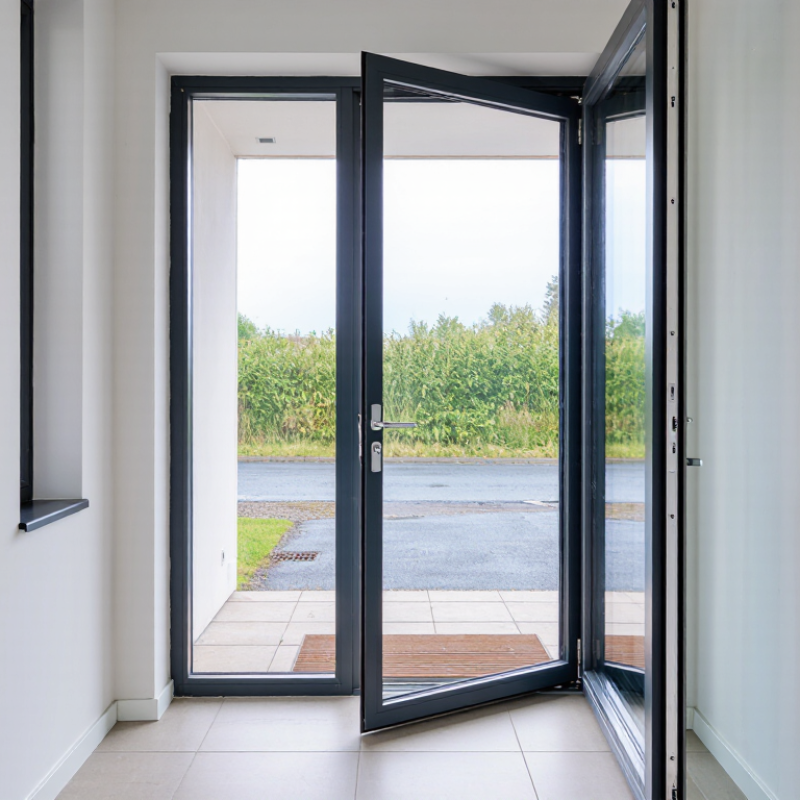
10 Tips for Choosing the Best Aluminium Entry Door
Define Your Doorway, Usage Needs, and Design Priorities
Begin with the doorway, not the door catalog. Measure the opening width, height, depth, and floor level carefully. Check whether the existing frame is square. Small errors can create drafts, sticking, or uneven gaps. A qualified installer should confirm the rough opening before ordering.
Think about daily use. A busy family entrance needs strong hinges, a durable handle, and a reliable locking system. If children, older adults, or mobility aids use the doorway, consider a low threshold and easy operation. For coastal or rainy locations, inspect drainage details, seals, and corrosion-resistant finishes. Thermal breaks can improve indoor comfort. Good weather sealing matters more than impressive sales language.
Then define your design priorities. Decide whether you want daylight, privacy, airflow, or a bold street-facing appearance. Glass panels should match your privacy and safety requirements. Dark finishes can look elegant, but they may show dust and scratches more clearly. That detail is easy to underestimate.
Do not ignore maintenance. Ask how the surface should be cleaned and repaired. Avoid choosing only by appearance. A beautiful door that feels heavy, leaks air, or clashes with the wall color may disappoint later. I would also leave room for reconsideration. Your first preference may change after viewing samples beside the actual brick, flooring, and surrounding light.
Define your doorway, usage needs, and design priorities before comparing aluminium entry doors.
Common nominal widths for single residential entry doors are 30, 32, and 36 inches, equivalent to approximately 76.2, 81.3, and 91.4 centimetres. Use the existing rough opening and required clearance to select the correct size, then prioritize thermal performance, weather resistance, security hardware, glazing, accessibility, maintenance, and overall design.
10 Tips for Choosing the Best Aluminium Entry Door?
Compare Aluminium Grades, Frame Structures, and Thermal Performance
Choosing an aluminium entry door starts with the alloy, not the finish. Common 6063 aluminium offers smooth extrusion and attractive surface quality. 6061 can provide higher strength, but it may be less convenient for detailed profiles. Ask for the alloy specification and temper condition. A polished sample is not enough. I once trusted appearance and overlooked section thickness.
Frame structure affects stiffness, security, and insulation. Look for reinforced hollow sections, accurate corner joints, and continuous weather seals. Multi-chamber profiles can reduce heat transfer through the frame. A thermal break, usually made from an insulating polyamide strip, separates interior and exterior aluminium. Without it, the frame can feel cold during winter. Check whether the door includes a thermal-break frame or only insulated glass.
Thermal performance depends on the complete door assembly. Compare the declared U-value, where a lower figure generally indicates better insulation. Confirm whether the figure covers the whole door, glass, or centre panel only. Low-emissivity glazing, warm-edge spacers, and compression seals can improve comfort. Ask for air, water, and wind-load test evidence from an independent laboratory. Installation still matters greatly. Even a well-designed frame can leak around an uneven opening. Measure the threshold, wall condition, and local climate before ordering. Coastal locations may also require a suitable protective finish. I would question any sales claim that lacks test conditions. Some details remain easy to miss.
Choosing an aluminium entry door starts with examining security features, glazing options, and hardware quality. A rigid frame should resist twisting when you press near the lock side. Look for a reinforced lock area and a reliable multi-point locking system. Ask how the cylinder resists drilling, snapping, or unauthorized manipulation. Security is more than a thick frame. Test the handle. It should move smoothly and return without looseness. A small mistake here can become an expensive repair.
Glazing deserves equal attention. Laminated glass can help retain broken pieces, while insulated glazing may improve indoor comfort. Check the glass specification, spacer design, and edge seals rather than trusting vague phrases. Privacy glass can reduce visibility without blocking natural light. Clear glass looks welcoming, but it may expose hallway activity at night. Inspect the glazing beads closely. Uneven gaps may suggest poor installation or future water entry. Some specifications sound impressive, yet they need practical verification.
Hardware quality affects daily performance. Hinges should support the door without sagging after repeated use. Adjustable hinges can help correct alignment, but adjustment should not hide a weak installation. Choose corrosion-resistant handles, hinges, and screws, especially near coastal air or exposed entrances. Open and close the sample door several times. Listen for scraping. Ask about replacement parts and maintenance intervals. I would not judge quality by weight alone; a heavy door can still have careless fittings. Pay attention to these details before appearance takes control.
Weather resistance should guide every aluminium entry door decision. Check the frame’s powder-coated or anodized finish for even coverage and sealed edges. Tiny gaps around the threshold can admit wind-driven rain. Look for adjustable seals that remain flexible after repeated temperature changes. A thermal break also reduces condensation on cold mornings. Do not rely on appearance alone. Ask for test information on air leakage, water penetration, and wind pressure.
Maintenance is usually simple, but it is not maintenance-free. Wash the frame with mild soap and clean water two or three times yearly. Salt air and road dust need more frequent attention. Inspect hinges, locks, drainage holes, and rubber gaskets during cleaning. Never use abrasive pads on the finish. They can leave dull scratches that collect grime. I would also check the threshold after heavy rain. A blocked drainage channel is easy to overlook.
A well-installed aluminium door may serve for 25 to 40 years, depending on climate, hardware, and daily use. The frame may last longer than the lock or weather seals. That distinction matters. Request written warranty terms and confirm which parts are covered. Installation quality deserves equal attention; even a strong door performs poorly when the frame is not square. Be realistic about lifespan. Coastal exposure, poor drainage, and constant sunlight can shorten it. An annual professional inspection may prevent a small seal problem from becoming expensive damage.
Choosing an aluminium entry door involves more than comparing frame styles and advertised prices. Ask the installer which local building standards apply. Check required U-factor, air leakage, water resistance, threshold height, and safety glazing rules. Request test reports, not vague claims. A qualified installer should explain flashing, sill drainage, insulation, and fastening methods in clear language. Poor installation can weaken an excellent door.
Study the warranty line by line. Confirm coverage for the frame, finish, locks, hinges, glass, and installation labor. Ask when coverage begins and whether labor costs are included. Check exclusions for coastal exposure, poor maintenance, condensation, or unauthorized alterations. I once saw a warranty that sounded generous, but it excluded nearly every common hardware problem. That detail changed the purchase decision.
Compare the total installed cost, not only the door price. Include measuring, delivery, removal of the old door, disposal, wall repairs, trim, threshold preparation, and permit fees. Ask whether taxes and future adjustments are included. Energy savings may help over time, but estimate them conservatively. A cheaper quote can become expensive after hidden preparation work appears. Request a written, itemized proposal and keep every measurement, test document, and warranty promise. Some buyers overlook maintenance costs, especially when choosing darker finishes that may show dust and scratches.
| No. | Decision Area | What to Check | Relevant Standard or Practical Benchmark | Warranty Point | Typical Cost Effect |
|---|---|---|---|---|---|
| 1 | Thermal performance | Confirm the whole-door U-value, not only the centre-panel value. Check whether the frame, glass, panel, threshold, and edge details are included. | For European projects, EN 14351-1 is the main product standard for external pedestrian doorsets. Lower U-values indicate better heat insulation; the required target depends on the local energy code and climate. | Ask whether thermal-performance claims apply to the complete installed doorset and whether replacement components remain available. | High-performance insulated frames and low-emissivity double or triple glazing generally increase the purchase price but can reduce heating and cooling losses. |
| 2 | Air and water tightness | Request test classifications for air leakage and resistance to driving rain. Pay particular attention to seals, corners, drainage paths, and the threshold. | Common European references include EN 12207 for air permeability and EN 12208 for watertightness. Higher classifications generally provide better protection when correctly installed. | Check whether water ingress caused by incorrect installation is covered separately from manufacturing defects. | Multi-seal systems, drained thresholds, and upgraded weather bars may add cost but can reduce drafts, leaks, and future repair work. |
| 3 | Wind-load resistance | Match the doorset to the building height, exposure, opening size, and local wind conditions. Oversized leaves may require stronger profiles or additional hinges. | EN 12210 is commonly used in Europe to classify resistance to wind load. The structural design should be verified for the actual opening dimensions. | Confirm that the warranty remains valid when the door is installed above the supplier’s stated maximum size or exposure limits. | Reinforced profiles, additional hardware, and engineered hinges can increase material and installation costs. |
| 4 | Security hardware | Review the cylinder, multipoint lock, hinge protection, anti-lift features, laminated glass options, and resistance of the frame-to-wall connection. | Where applicable, look for independently tested security performance such as EN 1627 resistance classes. A certified lock alone does not certify the complete installed door. | Ask whether lock cylinders, handles, hinges, and electronic components have separate warranty periods. | Multipoint locking, security cylinders, laminated glazing, and smart-access hardware commonly raise the total price. |
| 5 | Threshold and accessibility | Measure the finished floor levels and check the threshold height, drainage detail, door-clear opening, and swing direction before ordering. | Accessibility requirements vary by jurisdiction. A low or flush threshold may require careful sill drainage and waterproofing design to avoid leakage. | Determine whether damage caused by later flooring, paving, or drainage changes is excluded from the warranty. | Low-threshold systems and custom sill details may cost more because they often require additional waterproofing and site preparation. |
| 6 | Installation quality | Use a qualified installer to verify opening size, plumb, level, packers, mechanical fixings, perimeter sealing, flashing, and final adjustment. | Installation requirements are usually specified by the door manufacturer and local building regulations. The frame should be fixed to the structure, not supported only by expanding foam. | Many warranties require documented installation by an approved or suitably qualified installer and may exclude adjustment caused by building movement. | Professional installation often costs about 15%–30% of the door supply price, depending on access, removal work, and finishing requirements. |
| 7 | Glass and panel specification | Compare glazing type, safety glass location, solar-control requirements, privacy level, acoustic rating, and visual-light transmission. | Safety glazing requirements are governed by local codes. In many markets, laminated or toughened safety glass is required in doors and near floor level. | Check whether glass seal failure, scratches, condensation between panes, and accidental breakage are treated differently under the warranty. | Triple glazing, laminated glass, decorative panels, acoustic glass, and solar-control coatings can significantly increase the material cost. |
| 8 | Finish and corrosion resistance | Specify the coating type, colour reference, surface texture, coastal exposure requirements, and cleaning instructions. | For powder-coated aluminium, ask for a coating specification suitable for the exposure category. Coastal or industrial environments may require enhanced pretreatment and maintenance. | Finish warranties are often separate from hardware and structural warranties. Verify coverage for colour change, chalking, blistering, and corrosion. | Special colours, dual-colour finishes, textured coatings, and enhanced coastal treatments generally add to the price. |
| 9 | Warranty terms | Read the warranty duration, covered components, maintenance duties, exclusions, labour coverage, transferability, and claim procedure. | Residential market warranties commonly vary by component and may range from approximately 2–10 years. The written contract controls; a longer period is not automatically broader coverage. | Obtain separate written terms for the frame, finish, glass, lockset, powered access system, and installation workmanship. | A comprehensive warranty may have a higher upfront price but can reduce the financial risk of premature component failure. |
| 10 | Total purchase cost | Compare the complete delivered and installed price, including survey, removal, disposal, structural alterations, sill work, trims, delivery, taxes, certification, and aftercare. | Use at least three itemised quotations with identical dimensions and specifications. A low supply-only price is not directly comparable with a full installation package. | Confirm payment stages, defect-reporting deadlines, call-out charges, and the cost of warranty visits outside the installer’s service area. | As a broad planning range, a standard residential aluminium entry-door project may cost roughly USD 1,500–5,000 installed; custom sizes, glazing, access control, and structural work can raise the total substantially. |
Common 6063 aluminium provides smooth extrusion and an attractive surface.
Reinforced hollow sections can improve stiffness and resistance to twisting.
A thermal break separates interior and exterior aluminium with an insulating strip.
Compare the complete door assembly’s declared U-value. Lower values generally indicate better insulation.
Press near the lock side and check whether the frame twists.
Laminated glass can help retain broken pieces after impact.
Open and close the sample door several times. Listen for scraping.
Ask about flashing, sill drainage, insulation, fastening, and threshold preparation.
Review coverage for the frame, finish, locks, hinges, glass, and installation labor.
Choosing the right Aluminium Entry Door starts with understanding your doorway, daily usage, climate, and preferred appearance. Measure the opening accurately and decide whether you prioritize insulation, natural light, privacy, accessibility, or a particular architectural style. Compare aluminium grades, frame structures, thermal breaks, and overall energy performance to find a door that balances strength with comfort. A well-designed frame can help reduce heat transfer, improve stability, and support long-term performance.
Security and durability should also guide your decision. Look for dependable locking systems, reinforced construction, suitable glazing, and high-quality hinges and handles. Consider resistance to moisture, wind, sunlight, and temperature changes, as well as how much cleaning and maintenance the finish requires. Before purchasing, confirm that installation follows appropriate standards, review the warranty terms, and calculate the total cost, including delivery, fitting, hardware, and future upkeep. A careful comparison will help you select an Aluminium Entry Door that is attractive, secure, efficient, and suitable for years of everyday use.

Primeval Doors