How to Choose the Best Aluminum Entry Door?

Time:2026-09-30 Author:Aria
0%

Choosing the best Aluminum Entry Door requires more than comparing attractive colors and low prices. A front door must handle rain, sunlight, daily traffic, and changing temperatures. It should also support security, energy efficiency, comfort, and long-term value. Experienced installers usually examine the frame, threshold, hinges, locks, glazing, and weather seals together. Small details matter.

A practical evaluation begins with the aluminum grade and frame construction. Look for a thermally broken frame, especially in regions with hot summers or cold winters. This feature helps reduce heat transfer through the metal. Check the powder-coated finish for consistent coverage and a clear warranty. The glass should match your privacy, daylight, and insulation needs. Tempered or laminated options may provide added protection, depending on local building requirements. Ask whether replacement parts remain available after installation.

Accurate measurements are essential. A few millimeters of error can create drafts, uneven gaps, or difficult locking. The wall condition matters too. Moisture damage around the opening should not be ignored. It is easy to focus on the door slab and overlook the installation. That can be costly.

No single door suits every home. A premium model may still perform poorly when installed without proper flashing or adjustment. I would compare verified product specifications, manufacturer warranties, installer credentials, and independent customer feedback. Also, request a written quote with every component listed. Some choices remain uncertain until the door faces real weather. Careful inspection, realistic expectations, and professional installation create a more dependable entrance.
How to Choose the Best Aluminum Entry Door?

Key Factors to Consider in an Aluminum Entry Door

Choosing the best aluminum entry door requires more than comparing colors and prices. Thermal performance should lead the decision. The U.S. Department of Energy estimates that air leakage can cause 25–40% of the energy used for heating and cooling in a typical home. Therefore, inspect the door’s U-factor, weather seals, threshold, and frame joints. A thermally broken aluminum frame can reduce heat transfer, especially around the metal edges. Small gaps matter.

Glazing deserves equal attention. Low-emissivity glass can limit unwanted heat gain and heat loss, while the Solar Heat Gain Coefficient helps match the door to local sunlight. The National Fenestration Rating Council recommends checking certified U-factor and SHGC values instead of trusting vague efficiency claims. Yet efficiency is not everything. A low-rated number may mean little if installation leaves uneven gaps.

Security and durability also shape long-term value. Look for a multi-point locking system, reinforced hinges, impact-resistant glass, and corrosion-resistant finishes. Ask how the door performed in water, air, and structural tests; industry testing standards from FGIA provide useful benchmarks. Consider the sill height carefully, especially in rainy areas. A stylish threshold can become a drainage problem. Professional installation is often overlooked, and that is a costly mistake. Inspect the sample door in person, operate the lock, and check whether the seal compresses evenly.

Choosing the Right Door Style, Size, and Configuration

How to Choose the Best Aluminum Entry Door?

Choosing an aluminum entry door starts with how your entrance is used, not appearance alone. A busy family entrance may need a wide single door or a double configuration. Measure the rough opening, not only the existing door slab. Record its width, height, wall thickness, and floor level. Leave space for the frame and insulation. I once trusted an old measurement and missed a few millimeters. That small error created an uneven reveal.

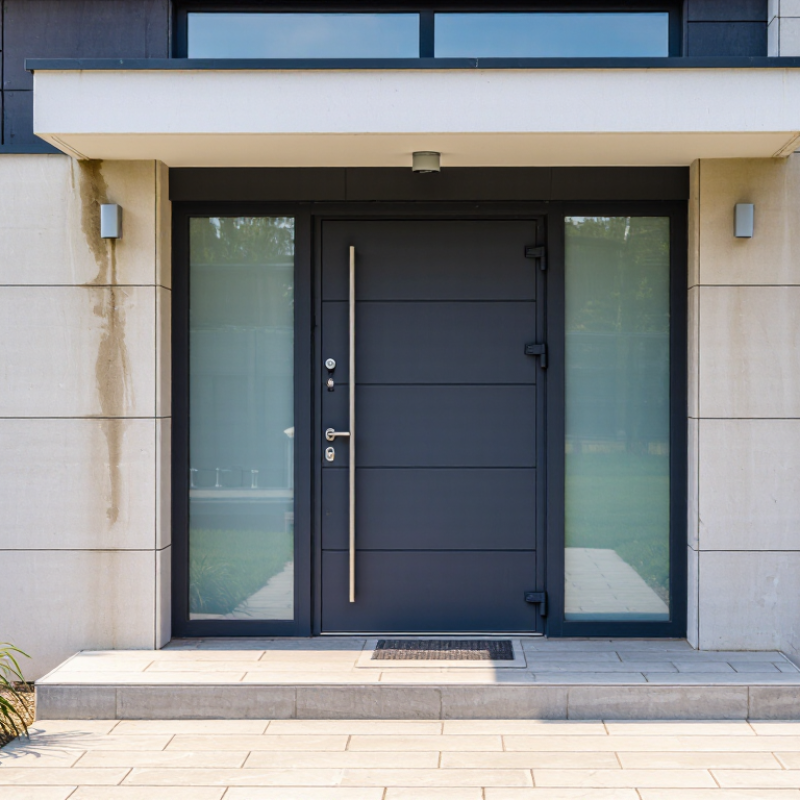
Door style affects movement, daylight, and privacy. A flush panel suits a clean, modern facade. Narrow glass panels bring light while limiting direct views. Full-height glass feels open, but it needs careful privacy planning. Consider the left-hand or right-hand swing before ordering. Check nearby walls, steps, furniture, and handles. An inward swing can block a hallway. An outward swing may need extra landing space. Local building requirements can also affect the door direction.

Choose the configuration around daily traffic. A sidelite can brighten a dark foyer, while a transom adds height without widening the entrance. For large openings, paired doors distribute weight, but both leaves need accurate alignment. Look for a thermally broken frame, durable weatherstripping, and an adjustable threshold. These features improve comfort when outdoor temperatures change. Ask for tested air, water, and wind performance. Specifications matter more than attractive photos. I still prefer checking the threshold on site; drawings rarely show every floor variation. Have a qualified installer verify the opening and local requirements before fabrication.

Comparing Aluminum Grades, Finishes, and Insulation

How to Choose the Best Aluminum Entry Door?

Aluminum grade affects strength, weight, and profile design. The widely used 6063 alloy extrudes smoothly and supports clean architectural shapes. The stronger 6061 alloy suits demanding structural applications, but it may cost more and offer less forming flexibility. No grade wins every climate. A thicker frame can still perform poorly if its thermal break is weak. This is an easy mistake to miss.

Finishes deserve equal attention. Anodized aluminum creates a durable oxide layer and preserves a metallic appearance. Powder coating offers broader color choices and strong surface protection when properly applied. Ask for testing against recognized AAMA performance standards.

Insulation is often the deciding factor. Polyamide thermal breaks reduce conductive heat transfer inside the frame. Low-emissivity glazing can further improve comfort near the doorway. The U.S. Department of Energy reports that windows and doors can represent roughly 25–30% of residential heating and cooling energy use. A lower U-factor generally means less heat transfer. Check the complete door assembly, not only the aluminum section. NFRC-certified ratings provide a more reliable comparison.

Tips: Request the alloy designation, finish specification, U-factor, and air-leakage rating. Inspect the threshold seal closely. Small gaps matter. Consider your climate, sun exposure, and coastal salt levels. I would not choose a finish by color alone; maintenance history and installation quality may matter more than appearance.

Evaluating Security Features, Hardware, and Weather Resistance

An aluminum entry door should be judged as a system, not as a metal slab. Security begins at the lock case, strike, hinges, and frame. ANSI/BHMA A156.2 cycle ratings provide useful evidence. Grade 1 locks are tested to 800,000 cycles. That number measures endurance, not resistance to every attack. Installation still matters. An excellent lock can underperform when short screws miss structural framing. The 2023 FBI Crime Data Explorer recorded 847,522 burglary offenses, but it does not identify failed door components.

Choose a multipoint or reinforced deadbolt arrangement only when the frame supports it. Look for corrosion-resistant fasteners, protected cylinders, adjustable hinges, and a deeply anchored strike plate. Hardware should close smoothly. Binding often signals poor alignment, not superior security. Ask for test documentation, not vague claims. ANSI/BHMA grades help compare products, yet field installation remains the uncomfortable variable.

Weather resistance needs measurable ratings. NFRC labels report U-factor, solar heat gain coefficient, visible transmittance, and air leakage. For an entry door, a lower U-factor generally means less conductive heat transfer. Aluminum conducts heat readily, so a thermally broken frame deserves attention. Check the threshold, compression seals, sill pan, and drainage path equally. U.S. Department of Energy guidance emphasizes proper air sealing around openings. NOAA’s 1991–2020 Climate Normals can reveal local wind, rain, and temperature stresses. Do not treat one laboratory number as a promise of perfect performance. Real buildings move. That deserves inspection.

How to Choose the Best Aluminum Entry Door?

Reference benchmarks for comparing security features, hardware quality, and weather resistance. Always confirm the door’s tested rating, installation requirements, and local energy-code criteria.

For security, look for a deadbolt with approximately 1 inch of bolt projection and properly reinforced strike-side construction. For weather resistance, lower U-factor and air-leakage values indicate better insulation, while a higher water-penetration test pressure indicates stronger resistance to wind-driven rain. The benchmark values shown are commonly used reference points rather than universal requirements.

Selecting Installation Options and Long-Term Maintenance Requirements

Choosing the best aluminum entry door depends heavily on installation and future care. A replacement installation can fit an existing opening, reducing wall disruption. New construction installation allows better control of flashing, insulation, and drainage. The choice is not always obvious.

The U.S. Department of Energy reports that windows can cause 25–30% of residential heating and cooling energy use. Doors are smaller openings, but poor seals still create noticeable drafts. Ask the installer for an NFRC label, verified U-factor, and air-leakage data. Confirm the rough opening is square before fastening the frame. A sill pan, compatible flashing, backer rod, and low-expansion foam help manage water and movement. Follow FGIA/AAMA installation guidance, not guesswork.

Small details matter.

Maintenance should include an annual inspection after heavy rain and winter weather.

Check corner joints, weatherstripping, threshold screws, drainage paths, and finish damage. Clean aluminum with mild soap and water; abrasive pads can dull the coating. Lubricate hinges and locks with a product approved for the hardware. Do not block weep holes with sealant. That mistake is surprisingly common. Coastal homes may need more frequent rinsing because salt deposits accelerate surface corrosion. Repainting can also fail if preparation is rushed. The door may look sound, yet a loose threshold can admit water beneath the floor. A qualified installer should document sealants, fasteners, and adjustment settings for later service.

FAQS

What thermal features matter in an aluminum entry door?

Choose a thermally broken frame, tight weather seals, and insulated threshold details. Small gaps matter. Check the U-factor and frame joints carefully.

Why should I inspect certified performance ratings?

Certified U-factor and solar heat gain values provide clearer comparisons. General efficiency claims can hide weak installation. Numbers help, but they are not everything.

How should glazing affect my door choice?

Low-emissivity glass can reduce unwanted heat gain and heat loss. Full-height glass adds daylight but may require privacy planning. Narrow glass panels offer a quieter balance.

How do I measure the opening correctly?

Measure the rough opening, not only the existing door slab. Record width, height, wall thickness, floor level, and available frame space. Measure twice.

Which door configuration suits a busy entrance?

A wide single door may suit frequent family traffic. Paired doors work for larger openings but need accurate alignment. A sidelite can brighten a dark foyer.

How can the door swing affect daily use?

Check nearby walls, stairs, furniture, and handle positions before ordering. An inward swing might block a hallway. An outward swing needs landing space.

What security details should I examine?

Look for reinforced locks, secure strike plates, strong hinges, and corrosion-resistant fasteners. Hardware should close smoothly. Binding often indicates misalignment.

How can I judge weather resistance?

Ask for tested air, water, and wind performance. Inspect the sill pan, drainage path, compression seals, and threshold. One laboratory result cannot promise perfect performance.

Why is professional installation important?

Poor installation can leave uneven gaps around an otherwise efficient door. Short screws may miss structural framing. I once trusted an old measurement, and the reveal became uneven.

Conclusion

Choosing the best Aluminum Entry Door requires balancing appearance, performance, security, and long-term value. Begin by considering the home’s architectural style, available space, door size, and preferred configuration, such as single, double, or sidelighted designs. Compare aluminum grades, surface finishes, thermal breaks, and insulation levels to find a door that offers durability, energy efficiency, and resistance to fading, corrosion, and changing weather conditions.

Security and daily usability are equally important. Look for strong frames, reliable locking systems, durable hinges, quality handles, and weather seals that help prevent drafts and moisture intrusion. Installation should be handled carefully, with accurate measurements and proper alignment to ensure smooth operation and lasting performance. Finally, review maintenance requirements, including cleaning, seal inspection, hardware adjustments, and finish care. By evaluating these factors together, homeowners can select an Aluminum Entry Door that complements their property while providing comfort, protection, and dependable service for many years.

Aria

Aria

Aria is a dedicated marketing professional with a deep passion for innovative strategies and a keen understanding of our company's product offerings. With a wealth of experience in the industry, Aria excels at crafting engaging content that highlights the unique features and benefits of our......